“Yantras have at their source the unboundedness of consciousness, the geometry creates a framework through which unboundedness can shine.”
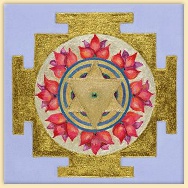
Kamala
An aspect of Lakshmi, Kamala reflects love, beauty, bliss, the unfolding of ones divine nature through our inner perception. Kamala represents the divine spark in everything.
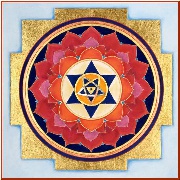
Durga
Durga reflects inner strength, fire, compassion, and creative activity. As an underlying power of the divine, Durga represents the cosmic rhythms.
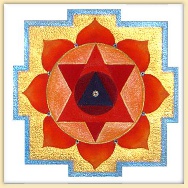
Purneshwari
Inspired by a Tibetan yantra, described as the “image of the deity who embodies the balance of cosmic forces maintained by the primordial centre.”
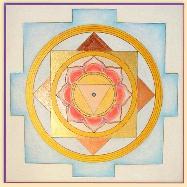
Bagala-mukhi
Inspired by a Tibetan yantra, included in the petals are the symbols of the psychic centers of the subtle body. Bagala-mukhi reflects stillness.
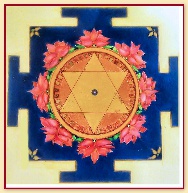
Saraswati
Saraswati represents aesthetic values such as knowledge and learning, intellect and the power of memory. Saraswati reflects universal qualities such as beauty, grace, sweet speech, creative sound, poetry, music, culture.
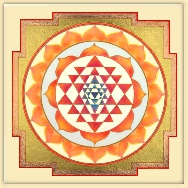
Shri Yantra
The Shri Yantra is considered to be the most ancient yantra, and the most complex. Shri Yantra encompasses one’s journey from the material level to the most sublime consciousness. Shri Yantra’s journey moves us through the physical, the full range of emotions, worldly desire, senses, ego to the transcendental.
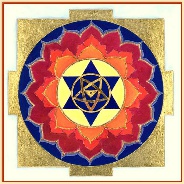
Lakshmi
Deeply connected with the lotus, Lakshmi reflects wealth, abundance, fulfillment, prosperity, light, wisdom, fortune, fertility, generosity. Lakshmi represents the splendor and glory of our inner spirit (Atman).
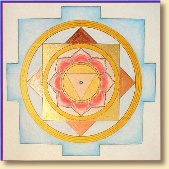
Shiva
Primal being. Shiva manifests into 5 elements — earth, water, fire, air, space.
Types of Yantras
- Yantras for Meditation
- Yantras for the Home
- Yantras based on one’s birthstar (Nakshatra)